
Pure Silk vs Art Silk Sarees: How to Identify the Difference
Confused between pure silk and art silk sarees? Learn the differences in fabric, shine, comfort, price and authenticity before buying your next saree.
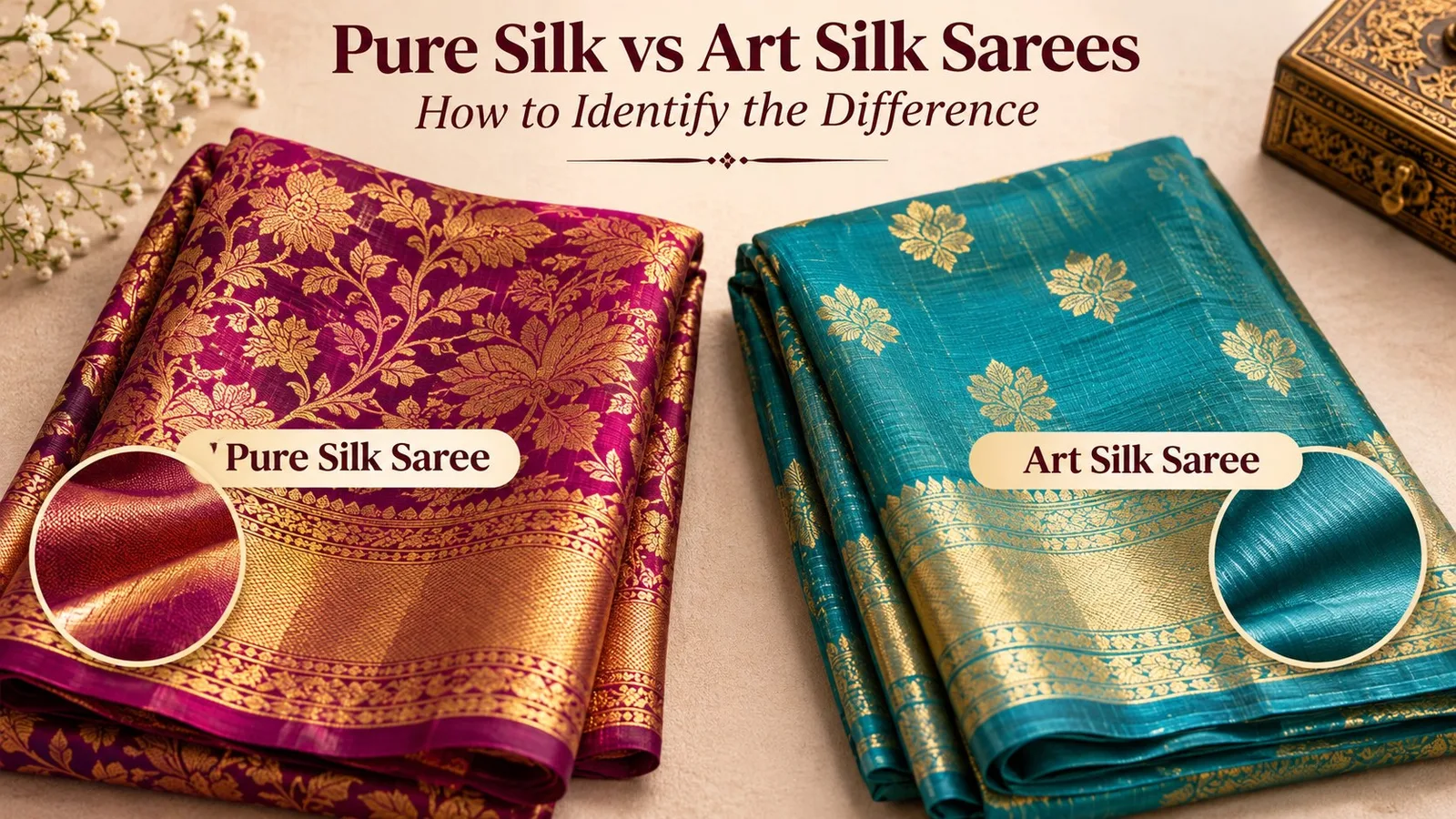
Silk sarees have been an important part of Indian fashion for generations. From traditional weddings and festivals to family celebrations, silk sarees are admired for their elegant appearance, rich textures and cultural significance.
However, when shopping for sarees online or in stores, many customers find it difficult to understand the difference between pure silk and art silk sarees. Both may look beautiful, but their fibre composition, comfort, maintenance and prices can be quite different.
In this MYSMME buying guide, we explain the key differences between pure silk and art silk, how to identify genuine silk, and which fabric may be better for your needs.
1. What Is a Pure Silk Saree?
A pure silk saree is made from natural silk fibres produced by silkworms. Silk is a protein-based fibre valued for its natural lustre, softness and distinctive feel.
India has a rich tradition of silk weaving, with different regions producing sarees known for their unique designs, weaving techniques and cultural heritage.
Popular Types of Pure Silk
- Mulberry Silk: Known for its smooth texture and beautiful natural shine. It is widely used in fine silk textiles.
- Tussar Silk: Recognised for its slightly textured appearance and natural golden or beige tones.
- Eri Silk: Often appreciated for its soft, warm feel and distinctive texture.
- Muga Silk: A traditional silk associated with Assam, famous for its naturally golden appearance.
Traditional saree varieties such as Banarasi and Kanjivaram may be made using pure silk, but their names describe regional weaving traditions rather than guaranteeing fibre composition. Always check the material details.
2. What Is an Art Silk Saree?
Art silk stands for artificial silk. It is a commercial term commonly used for fabrics manufactured to resemble the appearance and drape of natural silk.
Art silk sarees may be made from viscose, polyester, or other manufactured fibres and blends. The exact composition depends on the product.
These sarees are popular because they offer attractive designs, rich-looking colours and festive styling options, often at a lower price than pure silk.
Common Features of Art Silk Sarees
- Available in a wide variety of colours, prints and woven patterns.
- Often more affordable than pure silk sarees.
- Can have a smooth, glossy or silk-like finish.
- Available in lightweight and heavier festive styles.
- Comfort and maintenance depend on the actual fibre composition.
3. Pure Silk vs Art Silk Sarees: Key Differences
Understanding the following differences can help you select the right saree for your budget, comfort and occasion.
| Feature | Pure Silk Saree | Art Silk Saree |
|---|---|---|
| Fabric composition | Natural silk fibres | Manufactured fibres or blends |
| Appearance | Natural lustre | Silk-like finish, varying by fabric |
| Texture | Depends on silk variety and weave | Depends on fibre and finishing |
| Breathability | Generally breathable | Varies by composition |
| Price | Generally more expensive | Often more affordable |
| Maintenance | Usually requires delicate care | Depends on fabric and care label |
| Popular use | Weddings, festivals and special occasions | Parties, festivals and everyday styling |
4. How to Identify an Original Pure Silk Saree
Identifying genuine silk can be challenging because modern synthetic and regenerated fibres can closely resemble natural silk.
Check for Silk Mark Certification
In India, the Silk Mark label is an important indicator of pure natural silk. Look for a genuine Silk Mark label issued under the Silk Mark Organisation of India certification system.
Remember that Silk Mark relates to silk authenticity. It does not automatically certify that a saree is handwoven or that its zari contains precious metals.
Observe the Natural Shine
Pure silk often has a rich lustre that changes subtly with the angle of light. However, some art silk fabrics can imitate this effect, so shine alone is not a reliable authenticity test.
Understand the Fabric Texture
Different silk varieties feel different. Mulberry silk may be smooth, while Tussar silk can feel slightly coarse or textured. Genuine silk does not have one universal texture.
Read the Fabric Composition
Always check whether the product is described as 100% silk, silk-cotton, viscose, polyester or another blend. If the information is unclear, ask the seller for confirmation.
Choose a Reliable Seller
For expensive silk sarees, request reliable documentation or professional textile testing when authenticity is uncertain. Avoid home burn tests because they can damage fabric and create a safety risk.
5. Which Is Better for Weddings: Pure Silk or Art Silk?
Both pure silk and art silk sarees can be beautiful choices for wedding celebrations.
Pure silk sarees are often preferred for traditional ceremonies because of their natural fibres, rich appearance and cultural significance. Kanjivaram and Banarasi silk sarees are especially popular for bridal and festive styling.
Art silk sarees can be a practical alternative for wedding guests who want an elegant festive appearance within a smaller budget.
The best choice depends on your personal style, budget, comfort and how frequently you plan to wear the saree.
6. Which Fabric Is More Comfortable for Daily Wear?
Comfort depends on more than whether a saree is pure silk or art silk. The fabric weight, yarn, weave, climate and draping style all influence how comfortable it feels.
Lightweight natural silk can be breathable and comfortable, while viscose-based art silk may offer a soft and flowing drape. Some polyester-rich fabrics may feel less breathable during hot and humid weather.
For regular use, choose a saree that is easy to manage, comfortable for long hours and suitable for your local climate.
Explore the MYSMME saree collection for different designs, colours and styling options.
7. How to Choose the Right Saree for Your Budget
Before purchasing a saree, consider the following factors:
- Occasion: Decide whether you need the saree for a wedding, festival, office or casual outing.
- Fabric: Check the actual fibre composition rather than relying only on names such as silk, semi-silk or art silk.
- Comfort: Consider the saree's weight, drape and breathability.
- Design: Choose colours, prints and borders that match your personal style.
- Maintenance: Check whether the fabric requires professional cleaning or special storage.
- Authenticity: For premium pure silk, look for appropriate certification and trustworthy product information.
A higher price does not automatically guarantee pure silk, and an affordable saree is not necessarily poor quality. The right purchase is one that matches its stated composition, craftsmanship and intended use.
8. How to Care for Pure Silk and Art Silk Sarees
Proper care can help preserve the colour, texture and appearance of your sarees.
Pure Silk Saree Care
- Follow the manufacturer's care instructions.
- Use professional cleaning where recommended, particularly for delicate or embellished sarees.
- Store the saree in a clean, dry place away from direct sunlight.
- Avoid spraying perfume or deodorant directly onto the fabric.
- Fold and refold stored sarees periodically to reduce prolonged creasing.
Art Silk Saree Care
- Read the care label because art silk may contain different fibres.
- Do not assume every art silk saree is machine washable.
- Use the recommended ironing temperature for the actual fabric.
- Avoid excessive heat that may damage synthetic fibres.
- Store the saree carefully to prevent snags and creases.
9. Frequently Asked Questions About Pure Silk and Art Silk
Is art silk the same as pure silk?
No. Pure silk is made from natural silk fibres, while art silk generally refers to manufactured fabrics designed to resemble silk.
Can art silk look like original silk?
Yes. Modern textile manufacturing can create fabrics that closely resemble natural silk in appearance and drape. Visual inspection alone cannot guarantee authenticity.
Is pure silk always expensive?
Pure silk is generally more expensive than art silk because of its fibre production and processing costs. However, prices vary significantly depending on silk type, weaving, design and craftsmanship.
Can I wear art silk sarees for weddings?
Yes. Art silk sarees are available in beautiful festive designs, including woven motifs, decorative borders and rich colours suitable for wedding functions.
Does Silk Mark guarantee a handloom saree?
No. Silk Mark is associated with the authenticity of pure silk. Handloom origin and zari composition are separate characteristics that require their own verification.
Which is better for summer: pure silk or art silk?
It depends on the fabric. Lightweight natural silk and some viscose fabrics may be comfortable in warm weather, while certain polyester-rich fabrics can feel less breathable.
10. Final Thoughts: Which Saree Should You Buy?
There is no single answer to whether pure silk or art silk is better. Both offer different benefits.
Choose pure silk if you value natural fibres, traditional textile heritage and distinctive silk characteristics. Choose art silk if you prefer a wider range of affordable, silk-like fashion options.
Most importantly, make sure the saree's actual fabric composition matches the seller's description.
At MYSMME, we believe informed shopping helps customers choose sarees with greater confidence. Whether you prefer traditional elegance or contemporary styling, understanding fabric quality makes every purchase more meaningful.
Discover more styles in our saree collection, or read our complete saree styling guide for inspiration on different occasions.